Showing posts with label Bees. Show all posts

Tuesday, May 17, 2011

The Hives

Well, I knew it. I didn’t know it but I suspected something was wrong. I have been watching the hives for the last week and a half and knew there was something going on. I have seen little to no activity out of my girls so I asked my friend Jonathan to come out and take a look. He came out last Thursday night. He checked the newer hive first because that is the one I noticed had almost no activity. He showed me the honey in the comb, but there is no brood and no queen. (I forgot the camera).

The older hive, the one that I have had for a year, had very few bees inside. There were wax moths and hive beetles inside along with maggots. *sigh* As far as he can tell, the bees got into some pesticide. Again. None of the comb had honey on it at all. We live on 7.5 acres but we have incorporated neighborhoods all around us and around the lake so there are a lot of people making their lawns & flowers ‘pretty’ with fertilizers and such. I am not blaming the neighbors by any means, just wish this hadn’t happened. Again. He said it had only taken about 5-10 days too. I can't believe it happened so fast. :(

Thursday night was also our local bee meeting so we were very interested to see if anyone else is having any issues in this area. Some people are having issues with heat but not necessarily with poisons that they knew of. I am so bummed and ready to throw in the towel but I do have options. Here are a few:

·        I can take the hives off the property and have him put them somewhere else. We may just be to close to ‘civilization’. There are people in the city limits that do fine so that is why we think it is a particular poison on a particular flower.
·        We can build up one of the hives and bring it back until January, then move it into the orange groves (a little north of here) and not bring it back until June. The other hive will be cleaned up real good and possibly brought back depending on the first hive.
·        Or I can quit altogether and just buy my honey from Jonathan.

There may be other options, maybe someone has some ideas and can leave them in the comments?

No matter what I decide it will take a few weeks to build the hives back up so I have time to think about it. Oh, if you do nothing else, keep notes on your hives. Having notes from last year’s fiasco really helped us to figure out what happened this year.


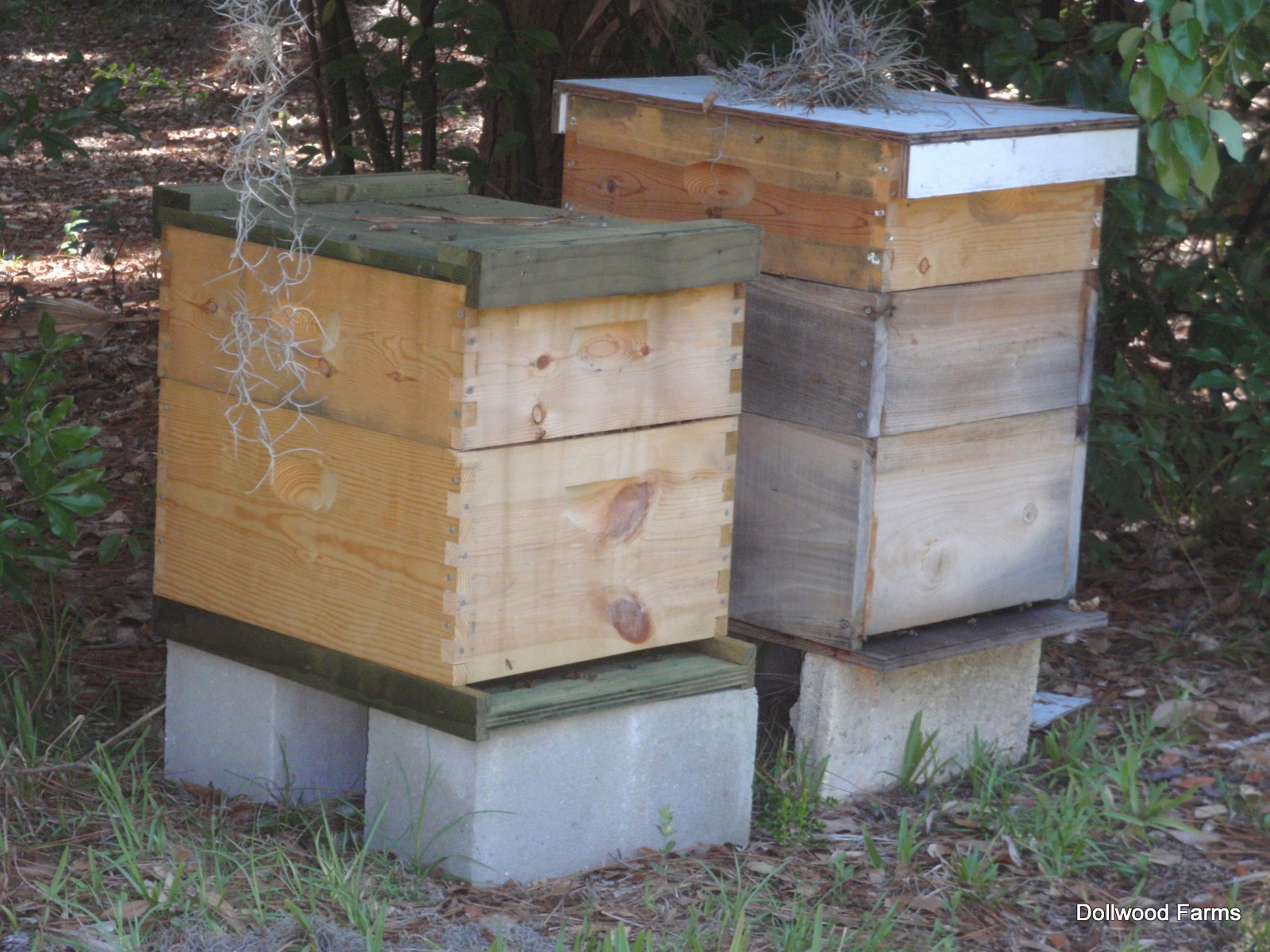
For now, Ray (Jonathan’s dad) has come and picked up the hives. Now when I look out our big picture window I see plain cement blocks. No girls flying in the sunlight, heading out to find nectar or home to make the honey.

I hope this post doesn’t discourage any new beekeepers. Everyone has different circumstances and although mine are unfortunate, I am not going to let it get me down. Everything happens for a reason and God is good all the time. It will work out for the best.   

Thanks for reading. Enjoy your week!
Thursday, April 21, 2011

Bees and swarming

Yesterday my friend came out to check on the hive and although they are doing well, the biggest hive split. Basically, this means that the hive let a queen bee hatch and she swarmed (left) and took half of my hive with her. Honey-wise, she cut my supply in half, lol, bee wise; she cut my production staff in half. This is the natural order of things for bees though and they way God intended so I am not too upset.

my hives. the oneon the right split.

Swarming usually happens when there are too many worker bees and their number exceeds the capacity of the hive. So the bees will raise a second queen and she will travel to a new location taking half of the drones and half of the worker bees with her. This usually occurs in the spring or summer months. It can also happen around August in my neck of the woods.


The new location is picked out by "scout" bees that are very good at picking out the new hive location. Important things to the scouts include drafts, accessibility, guard ability, size and location. Sometimes they do not find it before the ‘swarm’ has taken place so they move into unusual places such as the bumper of a car, mailboxes and low hanging branches of trees. Low hanging branches is what I am hoping for since we have a lot of trees on the property. I remember the day they swarmed but wasn't 100% sure that is what they were doing. It was a beautiful sight to see, even if I was losing half of my hive. L All of the bees looked like a swirling, moving mass of black and shiny gold moving through the air and into the tree. Our whole family stood at the picture window, watching them in amazement and appreciating the beauty of it all. The kids remarked they were glad they were in the house and not in the thick of it.


So yesterday when Ray confirmed that the hive had split, I was a little sad, but hopeful at the same time. Maybe a little leisurely walk around the property is in order. If I can find them then we can give them a nice clean box to live and work. J There was some good news in that I have lots of honey. The bees haven’t capped it yet so we have to be a little more patient before pulling any honey. I am sure it will be worth the wait.

Tuesday, April 19, 2011

Hive Location

Hive location is a very important part of having bees. They need the sun to fly but they also need shade to keep cool during the summer months; not too much rain or wind, the list goes on. My hives sit between 2 pine trees with some bushes around and they get good sun around 10am or so (at this time of year) and they can be seen coming back to the hive well into the early evening. They love morning sun and the sooner they are out of the hive foraging, the better for you.

There are my girls!

The hive doesn’t actually take up too much room so you don’t need a large yard to accommodate it.  Hives can be kept in small yard, on your roof and even on a balcony.  If you have a small yard, you will want your bees to be comfortable, but yourself and neighbors too. Watch them and familiarize yourself with their flight patterns as they may change. You might have to adjust the hive depending on how close your neighbors are. A lot of urban people keep them on their rooftops for space issues but also so the neighbors are not in the direct flight of the bees leaving or returning home.

When they leave the hive they fly up and outwards making a series of spirals. This orients them and imprints an aerial image of the hive for the return trip home. They are pretty full of nectar and pollen when they return though so they usually make a direct shot back to the hive and make their deposits.

Bilburgia (sp?)

They like to be sheltered from the elements and the hive itself will protect them from most types of weather that mother-nature throws at them. You wouldn’t want to put it in a windy spot or put the entrance facing the wind. They are strong fliers but why make it harder on them? Bees regulate the temperature inside the hive (with their wings) but they need some shade too keep cool also. They keep the hive at a steady 95 degrees.

Avoid sunken areas because when the air gets cool, the bees will have to work harder to heat the hive.  Also, bees don’t mind the cold but they dislike any dampness. They usually seal up their hive with something called propolis (a glue like substance). If your hive is near trees or bushes, you need to make sure the branches are trimmed back. If the wind is blowing hard, it could knock a branch on the hive and disturb the bees or a branch could fall on it and do some damage.

If you don’t have a source of natural water nearby you will need to provide one for them.  They can’t swim though so make sure to have something inside the container or pot for them to stand on. You could even throw some small sticks (make sure they float) into a bucket.  As with any ’pet’ you give water to, keep an eye on it and don’t let it run out.

Another important point is to make the hive level. When my bee-man came out and put the hive in, his iPhone has an app for leveling things, lol, easy peasy. We put the hive on bricks and they are good to go. I wish I could have painted the hives before I got the bees, but it is what it is. One more thing, you will need to make sure you have plenty of storage for all the equipment you will be using.

Are you thinking of getting bees? I love, love, love watching mine dance and fly in the late afternoons. Thanks for reading. J  


Thursday, April 7, 2011

Bees and their honey.

Most beginning beekeepers have one goal in mind when they start beekeeping: producing honey. The delicious golden nectar bees work so hard to make is enjoyed worldwide. J Bees usually make more than they need but the beginner has to learn to judge how much honey to keep in the hive (including winter stores) and how much you can harvest. This is easier said than done. Other decisions that need to be made by the beekeepers are when to remove the honey and how. Last year we removed the little bit of honey I harvested from my hives around November. I only collected seven and a half pounds, but I had some queen and pesticide issues that I feel are all taken care of this year.

Brazillian Pepper comb honey

The how was easy. My bee-man came out and picked the frames he determined would be enough for me but leave plenty for the bees. Then we met at his house where he melted the wax off of the ‘capped’ honey frames. He used this long heated ‘knife’, but it looked kind of like a flat curling iron to me, lol. After the ‘caps’ were off the comb he put the frame vertically into an extractor which spins around very fast and the centrifugal force sprays the honey out of the combs and down into the bucket. Then it goes through the spigot and is strained, and into another smaller bucket where you can strain it one more time as it gets put into bottle and jars. It had to be strained because sometimes there are pieces of wax or there could be a stinger or other bee parts in the honey. It is a neat process to watch and be involved with.


The color of Honey can range from dark amber to an almost clear color. Color will depend on what is blooming at the time they collect the nectar. Some people prefer the lighter honey for the aesthetic qualities. However, the darker honey is said to have a higher proportion of antioxidants, vitamins and minerals. Honey is used for sore throats & coughs in this house. We also drink a teaspoon of honey with a teaspoon of apple cider vinegar diluted in some warm water in the mornings (when I can remember). It can also be used as a topical dressing for wounds, burns and other injuries. The daughter of a friend of mine has a disease (Epidermolysis Bullosa) that causes blistering of the skin and has since she was born. The unfortunate thing about this disease is there is no cure. The blisters will pop up somewhere else on her body, but at least for now, the honey helps to ease the pain.


The uses for honey seem to be endless. Honey can be used for beauty treatments also. (I may do a recipe/post on that next). Does the color of honey matter to you? What is your favorite flavor?

Monday, April 4, 2011

To bee or not to bee...


As you may know, I have two bee hives. I rent the hives from my friend as I learn all about how to take care of them on my own. I go to the monthly bee association meetings too and they are very helpful. (Find one and join if you are at all interested in this hobby). If you are thinking of taking care of bees and their hives take the time to learn all you can from reading and find an experienced bee keeper to talk to and pick their brain.

credit: bee topography

Here are 7 basic tips for getting started in bee keeping.

1) Start with new equipment of standard design and dimension. Used equipment  has the potential to create problems that a beginner is not prepared to recognize or handle. The wood may not be of good quality, there could be existing disease, etc.

2) Do not experiment during the first year or two. I am renting the hives because I want to learn and have someone in the know there helping me know what I need to and do it correctly. I learn better from watching rather than reading a book. (However, every book I have read on the subject has been fascinating so far). Even with help, my first year was a little rough.

3) Don't run out and buy every piece of clothing available for bee keeping. You may be able to wear long pants and long sleeves and the hat with a veil. My 'bee-man' has worn shorts. I am more careful. ;)

4) Start with Italian bees. They are standard in the US and pretty common. They are also more docile.

5) Start with 2 colonies if you can. You can compare the hives and see what is going on if one is having issues. If things go well, you could double the honey too. ;)

6) Start early in the season. I started in March as the weather is good here that time of year. You can find out your 'season' by checking with hive inspectors or local beekeepers. I am in Florida and have a long season.

7) Know that your hives will not produce much honey the first year. I lost my queen soon after I got my hive and that alone threw off the production for my year. At the end of the season, however, I was able to get some honey and it was delicious!!

My Orange Blossom "comb" honey

There are so many things to know and learn. There are many books at the library on the subject so check them out. Bees need our help! They need people to take care of them and help them thrive again. Their numbers have declined drastically over the last few decades. They pollinate our crops and provide healthy food that humans have been eating for centuries. They are worth saving. :)

Please make sure you are not allergic to bees before starting this adventure!


Tuesday, March 22, 2011

Spring and bees!

Spring is here! It is a time when gardeners dream about wheel barrows, dirt, rakes, seedlings and shovels and all things gardening! Oh, maybe that’s just me…
The little bees have gotten back to searching out nectar, nurturing babies and cleaning the hive. They will fly up to 2 miles away to search out nectar and water. Orange Blossom honey is one of my favorites and during the year I can usually get the orange blossom, wildflower and brazillian pepper honey from my hives. A lot depends on the weather. I love the different tastes from each flower and season. Even the colors of the honey are different! It still amazes me.
Another type of honey we can get from the hive is Saw Palmetto, but as many palmettos as we have around here they don’t seem to bloom that often. Hopefully this year will be much better than last. Last year was a rough one for me. I lost a queen and at least half my hive due to old age (queen) and my neighbor spraying insecticide. When you lose an older queen, the new one has to learn her ways and that can take a little while.
I made a point to go over and visit with the neighbors this year and talk to them about my hives in hopes they would spray their pesticides either before or after the blooms are blooming. They were very receptive and understood. They used to have someone that had some hives on their property and understand all about bees and how helpful they are. They also said they were using a very low grade pesticide this year and were grateful for my bees coming over and helping out! Their groves are filled with wonderful citrus trees. They have this amazing Lime tree over there that my neighbor told me her granddaughter gave to her. I offered to trade honey for some Limes any day of the week. I can start on my own little grove right here on the homestead. J I have actually already added 2 “Orlando” Tangelo trees this year, thanks to my niece who gave them to me for Christmas!  I can’t wait to taste them in a few years! One of the plants had one single little bloom on it and I am sure my girls did the work required, but I am not sure if I will actually get fruit this year or not. We have a few Key lime trees also, but only one produces so far.
I hope you enjoy what you read here and continue to come back. Feel free to comment any time and let me know if you have any questions. Thanks for reading!

Tuesday, March 15, 2011

Bees & Daylight Savings time

Sunday was the start of Daylight Savings Time. To a commercial beekeeper, who makes his living from his bees, this is not a good thing. Most of the time bee keepers check their hives in the evenings. That way all the bees are in the hive and you can get a better idea of how many are inside and how they are all doing. Are there lots of babies? Is the queen doing well? How is the honey production and especially to check for hive beetles and mites.  With the sun going down later this means the bees are out and about doing what they do. Which is a good thing, however, it makes things complicated when the bee keeper has 700 hives to check. He may not get home until after midnight, depending on how far away the hives are. Some beekeepers move their hives with what is blooming. It helps out the farmers that are growing the trees or crops and he gets the benefits of the honey.


                                                 My queen is there, can you find her?


For someone like me that has only 2 hives it is not a problem. I can check my hive and still get to bed at a decent hour. I can also garden longer in the evening so I don't mind the time change. Having more sunlight is a good thing for me and my bees.

LinkWithin

Related Posts Plugin for WordPress, Blogger...